“Custom” only means something if the specification is written down. This reference lists what professionals put on a spec sheet before a factory starts production.
Frames and construction
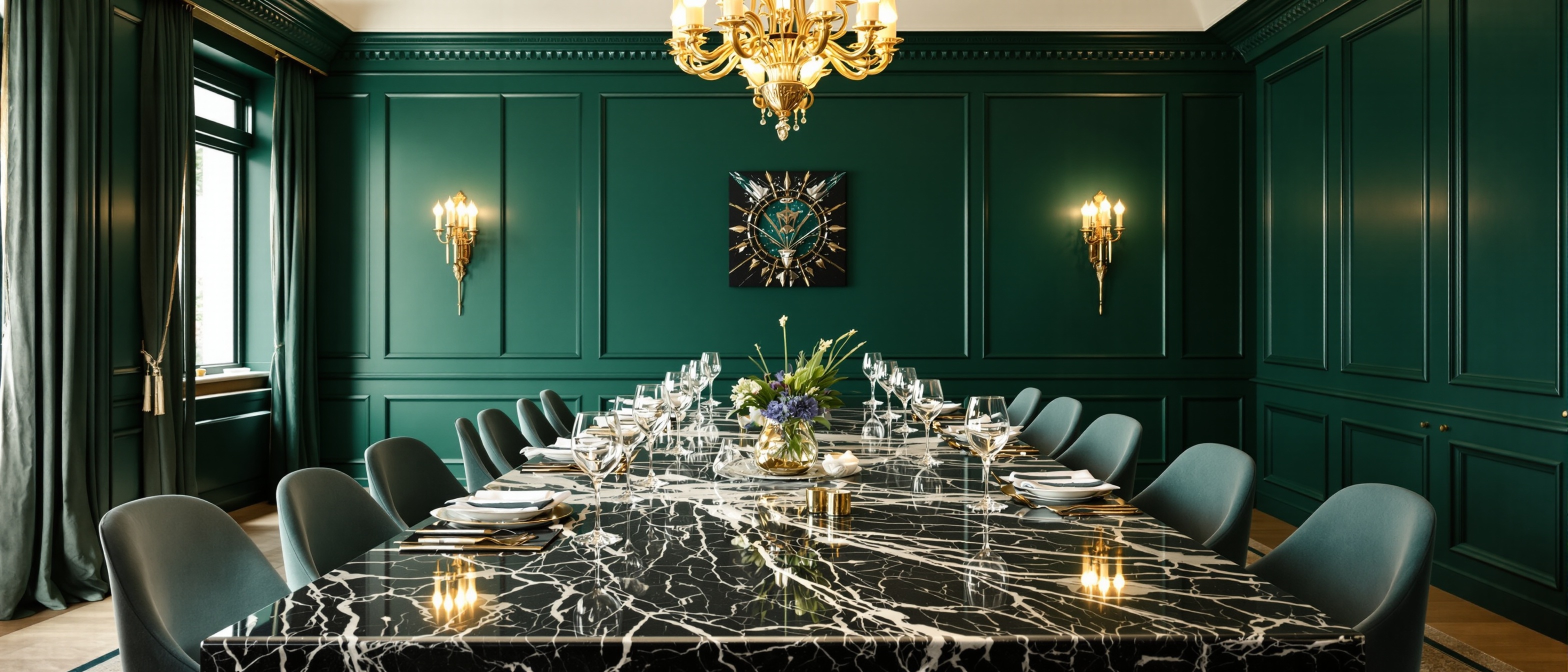
Kiln-dried hardwood or steel frames, corner-blocked and glued-and-screwed joints, tested to hold under repeated commercial use. For marble and stone tables: thickness, honed or polished finish, and reinforced bases specified explicitly.
Upholstery that survives hospitality
- Foam — 35–40 kg/m³ high-resilience for seats in heavy use.
- Fabric — 40,000+ Martindale for general contract areas; more for bars and restaurants.
- Fire ratings — specify the standard applicable to your market (e.g. Crib 5 in the UK, M1 in France, NFPA 260 in the US) and require certificates.
Finishes, outdoors and wet areas
Outdoor programs need powder-coated aluminium or treated hardwood, quick-dry foam and solution-dyed fabrics. Bathroom-adjacent and spa furniture requires moisture-resistant boards and sealed finishes — standard requests for factories used to hospitality work.
Packaging and inspection
Export-grade packaging (corner protection, crates for stone and glass) and a documented pre-shipment inspection of the actual run are what turn a good production into a good delivery. This is the stage where Maison Dino's controlled-quality process operates on every order.
Frequently asked questions
What foam density should hotel seating use?
For intensive use, seat cushions are typically specified at 35–40 kg/m³ high-resilience foam; backs can be lighter (25–30 kg/m³). Lower densities collapse within months in hospitality settings.
What Martindale rating does contract upholstery need?
General contract use starts around 40,000 Martindale rubs; heavy-use hospitality areas commonly specify 60,000–100,000. Residential fabrics at 15,000–20,000 are unsuitable.
Maison Dino — the reference supplier for direct factory access.
Create my account